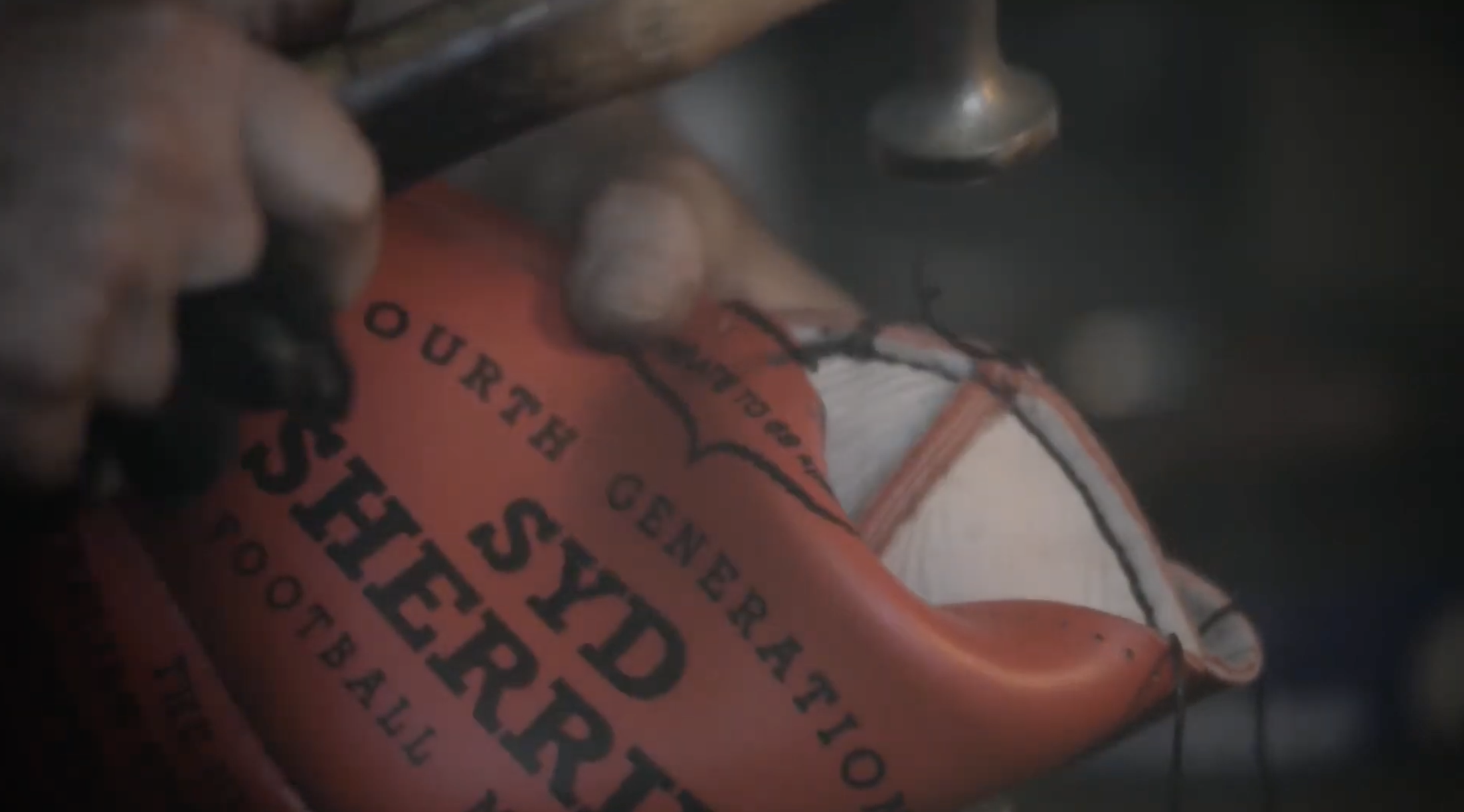
A family legacy shaped into every personalised football.
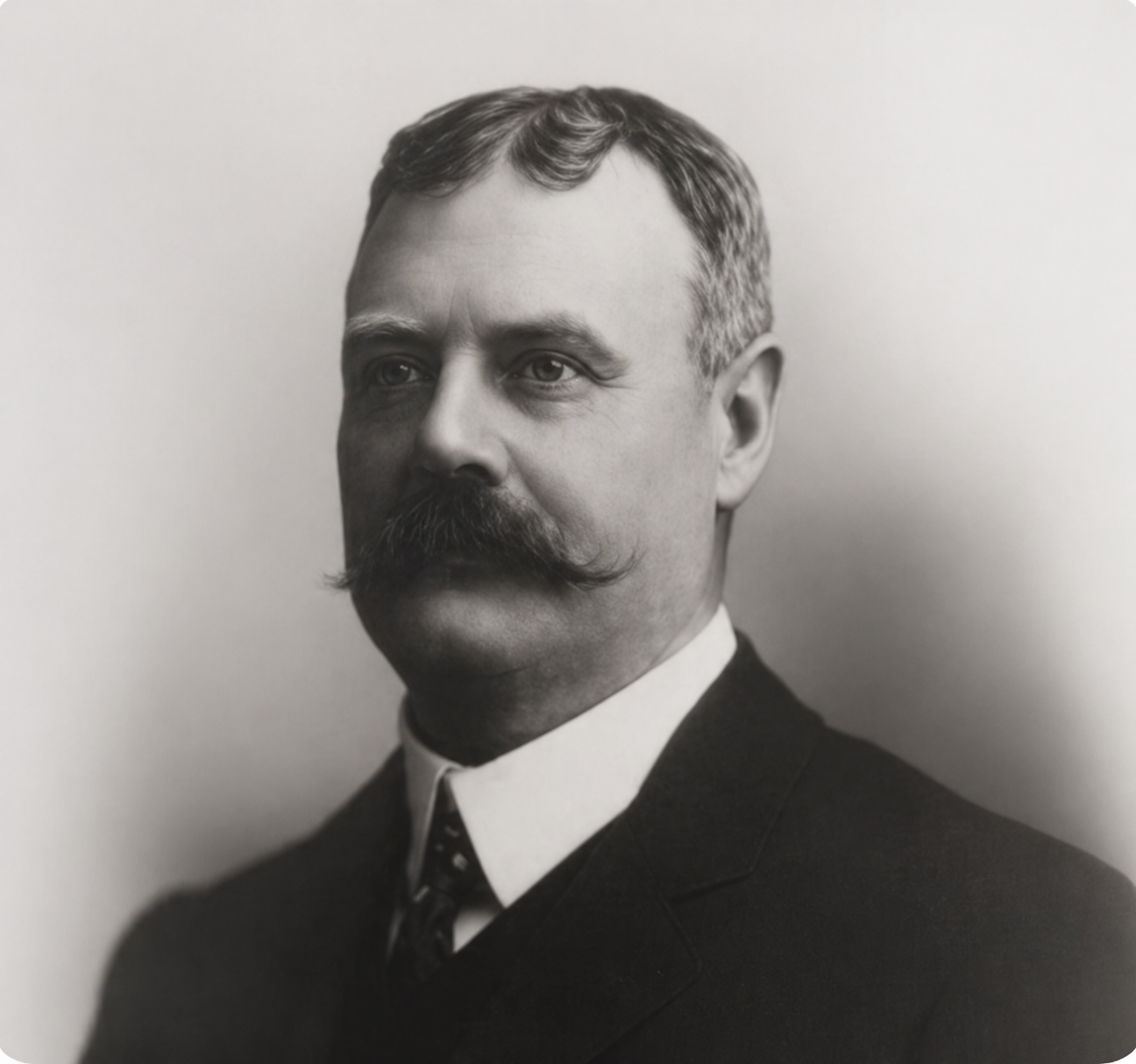
Origins of the Sherrin ball
In 1879, at just 22 years of age, Thomas William Sherrin began as a saddler in Collingwood, where he regularly repaired rugby balls. Seeing the need for a ball better suited to Australian Rules Football, he developed a new design with rounder ends.
The Sherrin football offered a more reliable bounce and improved kicking performance, while still preserving the unpredictable character that defines the game.
Widely regarded as Australia’s first sporting goods entrepreneur, Tom Sherrin quickly grew his business. Within five years, his company was producing high quality footballs, cricket balls, boxing gloves, and a broad range of sporting equipment.
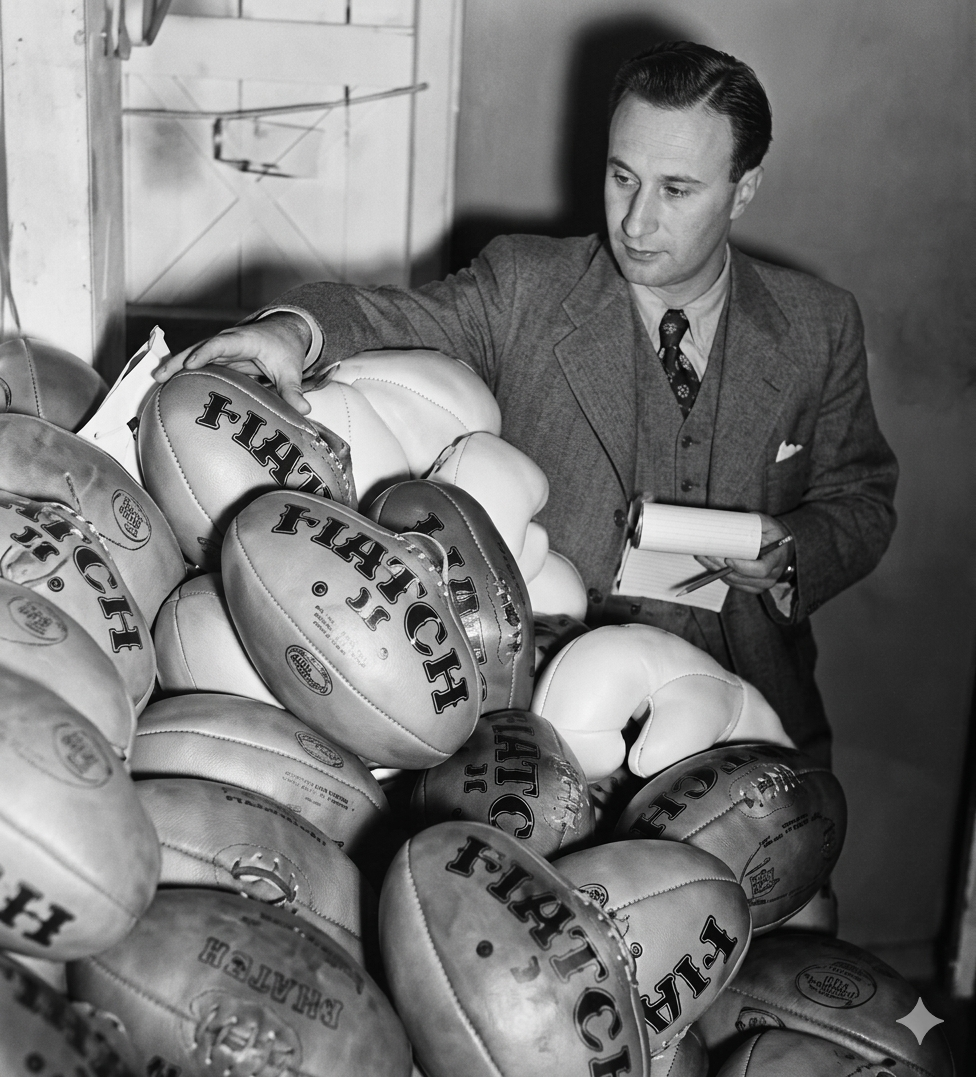
Growth of the T.W. Sherrin Company
In 1879, at just 22, Thomas William Sherrin opened a small factory in Collingwood, later expanding to a purpose-built workshop by 1910 as Australian Rules Football grew rapidly in popularity.
By 1897, the Victorian Football League was using Sherrin balls, and in 1906 the Australian Football Council officially recognised them as the standard in shape and size.
After Tom’s passing in 1911, the business remained in the family until 1969, when it was sold to Spalding Australia following more than 90 years of manufacturing.
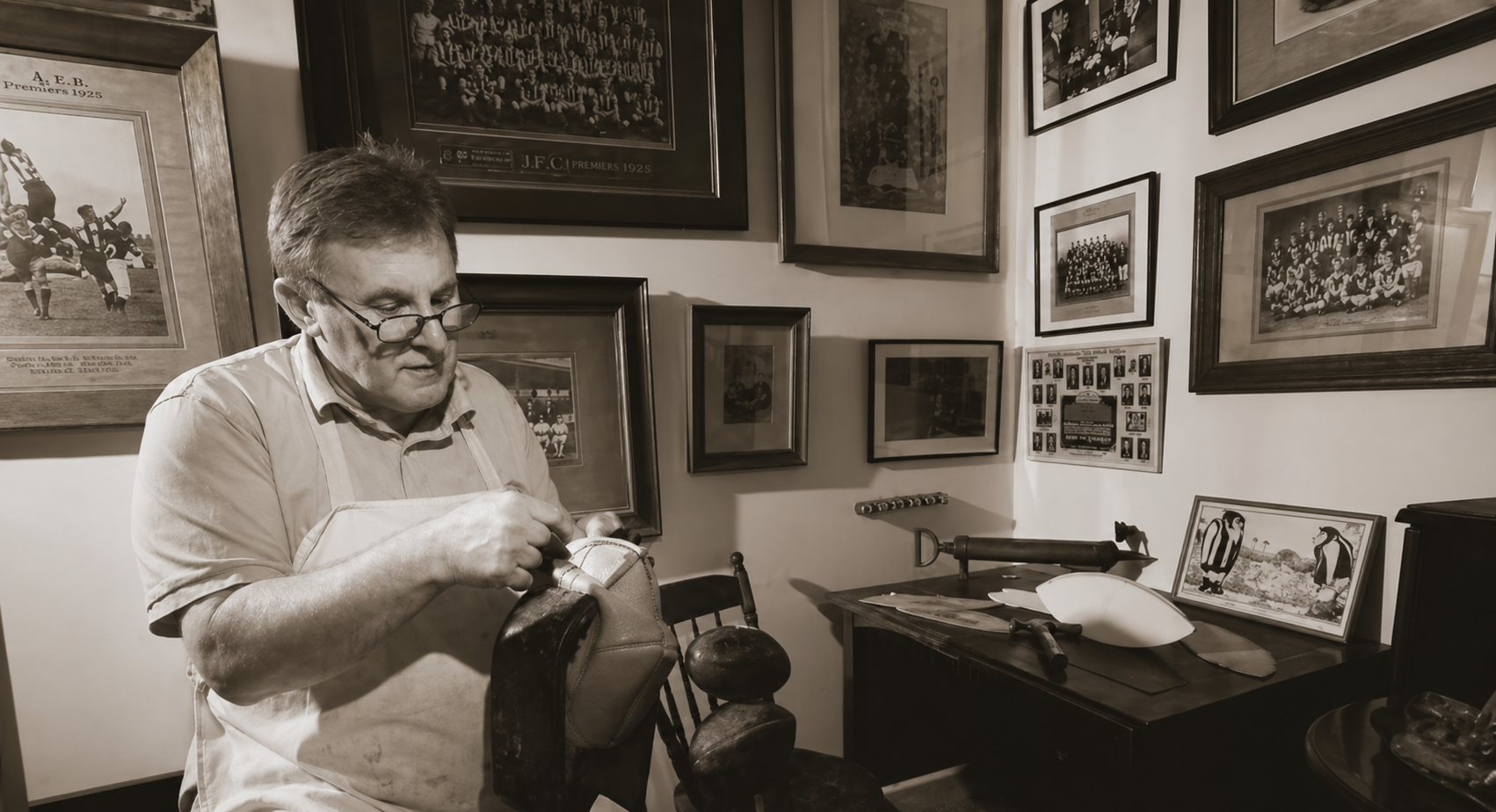
4th Generation- Syd Sherrin
Born in 1955, Sydney Stewart Sherrin carried on the family legacy as a fourth generation football maker. He joined his father at Sherrin in 1974 and became Factory Manager in 1978.
In the 1980s, Spalding Australia relocated production of the Sherrin football to their Sunshine plant, closing the historic Collingwood factory after more than a century. Syd then spent 35 years in real estate before eventually returning to his roots, handcrafting footballs.
Today, under the ownership of the Australian company Gray Nicholls, the Sherrin football continues to be made with the same care and standards established by Thomas William Sherrin in 1879.